Australia
 New Zealand
 Philippines
 Hongkong
 Singapore
 Malaysia




The Interpretation of Vernacular Architecture in Porous Habitat


Yogyakarta is a province in Indonesia widely recognised as the City of Students. Housing more than a hundred of higher education institutions, it attracts more students across many regions of Indonesia year after year. As a result, the need for student housing is simultaneously growing fast. Porous Habitat presents as a response to this condition.
Located in a tranquil village in Sleman, Yogyakarta, Porous Habitat is a 12-unit boarding house within a short-walk distance from a local private university. The house offers more than just a place to live, as it embraces the spirit of its surroundings.

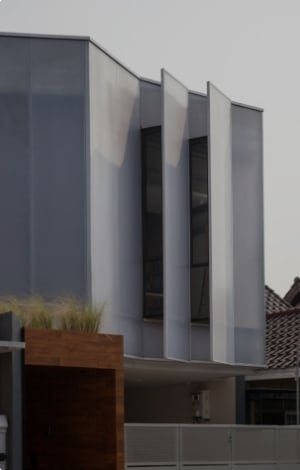
The design of Porous Habitat draws inspiration from the familiar form of limasan or also known as hip roof, a traditional sloping roof structure commonly found in its surrounding. The vernacular reference is then reinterpreted into a humble, contemporary building mass. The materials implemented are purposefully left raw and monolithic, quietly becoming a part of its neighbourhood instead of standing out.

The vernacular boarding house lives up to its name, both physically and philosophically. The term porous not only refers to natural lighting and air flow, but also the openness toward the ambience and rhythm of village life outside the house.
The ground floor remains grounded, both physically and socially, while the upper floor opens up to the sky. Both floors remain porous to the sense of place: its serenity, sense of community, and the warmth of simple everyday life.
The sense of connectedness becomes crucial, especially for the students in their journey of learning and growing, living far away from home. In this context, connectedness goes beyond social interaction, but more of feeling welcomed as well as maintaining respect within community in the neighbourhood.
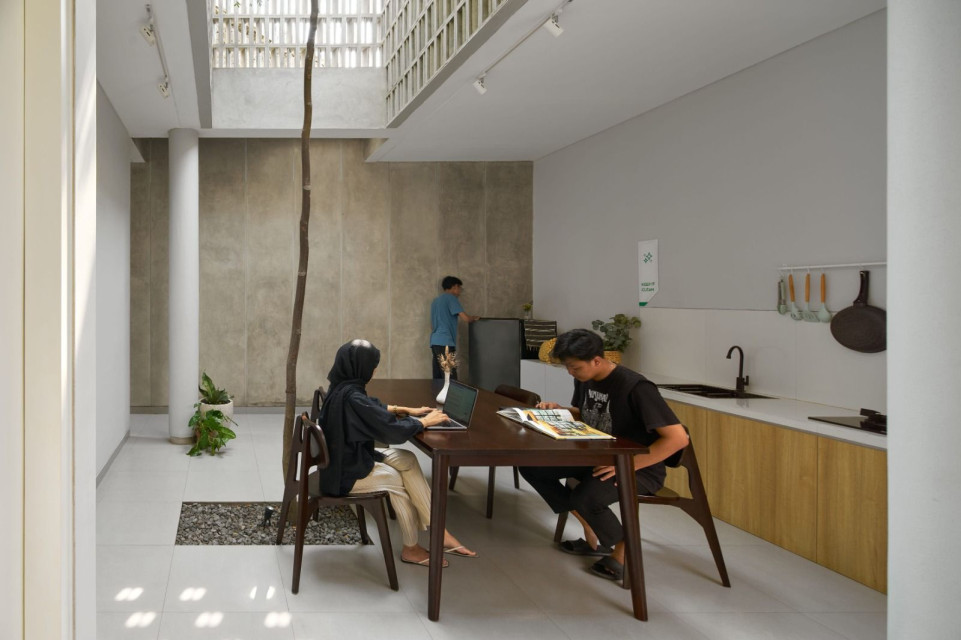
On the ground floor, the communal space takes the form of a rural village layout. Further emphasising its porosity, the parking area uses plastic grass pavers, allowing native grass and gravel to exist in between. Such application is highly functional while also effectively implementing green design strategy. The shared kitchen and dining area are shaded by trees, softening the daily routines and reducing the stress of its users.
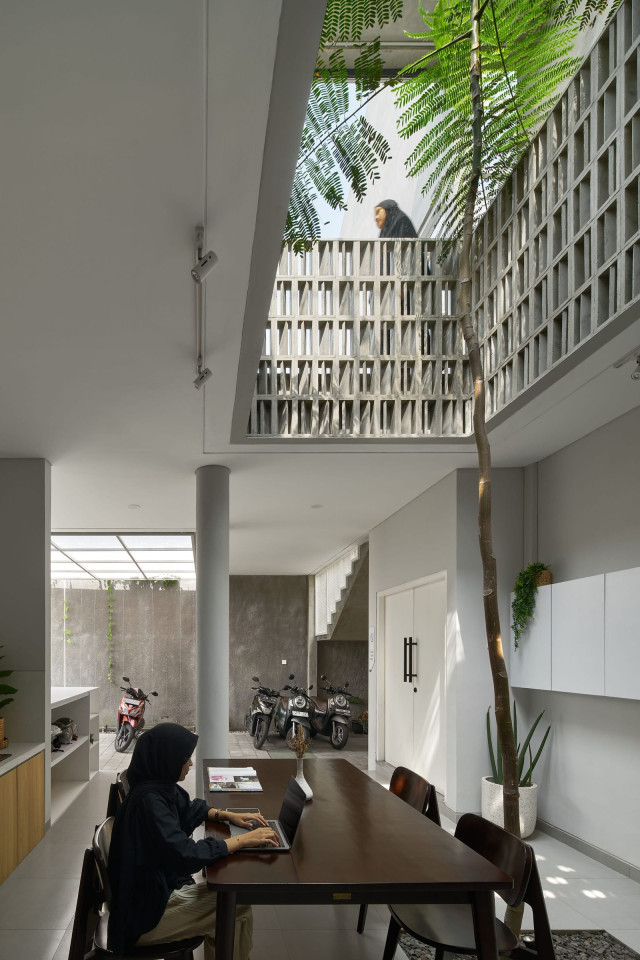
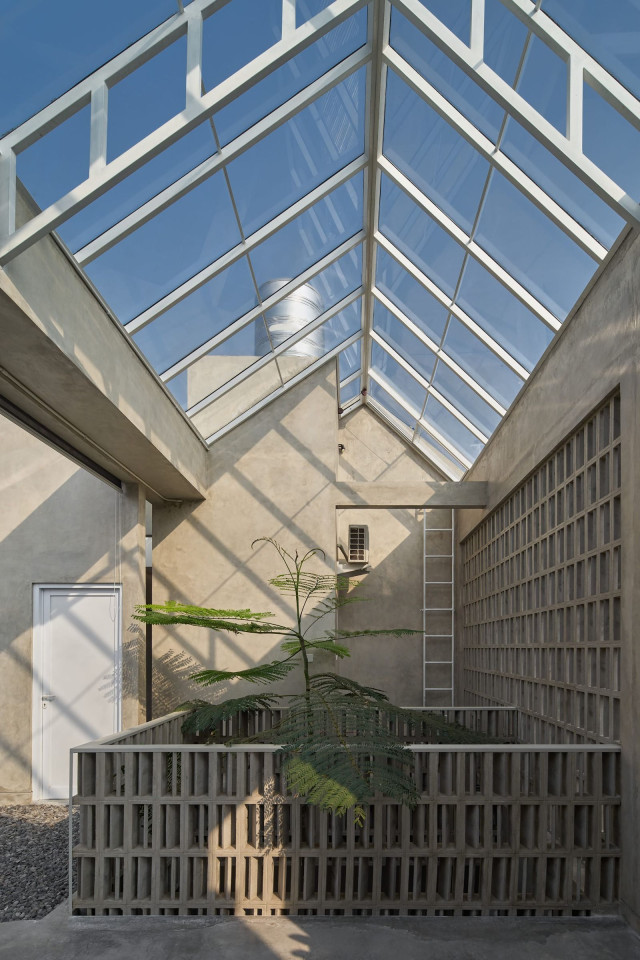
The corridors receive natural light through 15-centimeter-wide skylight hidden within the cove-shaped gypsum ceiling. The skylight provides safe and comfortable lighting without giving off excessive heat to the house.

Each unit extends toward the corridor with a small transitional space, separated only by strands of rain rope. This space holds shoes storage and small benches, intentionally designed to initiate conversations. The small yet impactful gestures encourage casual social interactions, increasingly building a sense of community and security among residents. The layout and furniture also supports local customs like sitting on the floor to study together, providing space for a familiar, contextual practice.


Inside the unit, the 9–12 square metres rooms feature two openings for cross ventilation, allowing fresh air, natural light and view to enter without sacrificing privacy. The building structure utilises a closed concrete portal system with 4.5-metre spans. This structural system helps minimise the size of beams and the construction costs. The structural interval also creates narrow gaps between units, enhancing natural ventilation and space porosity.

Porous Habitat perfectly showcases the interpretation of contemporary vernacular architecture on its design as it emphasises highly on context, especially in terms of physical surroundings and cultural aspects of where the building is. Beyond a place to live, Porous Habitat is a space with a sense of connection, acceptance, and serenity within the slow yet healing rhythm of the village.