Tanaa Coffee is an adaptive reuse project that transforms an existing residential house in Purwakarta into a coffee shop. The design preserves most of the original structure while introducing minimal modifications to accommodate its new function. This approach maintains the character of the former house while creating a more efficient and sustainable renovation.
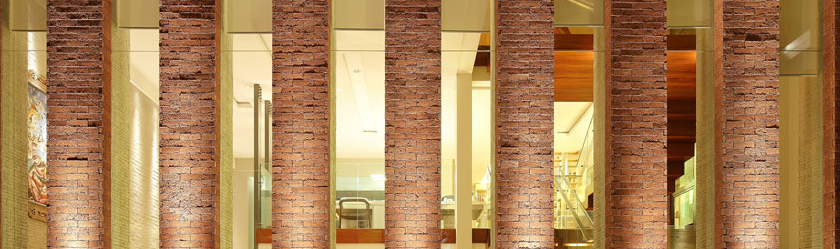
The architectural concept emphasizes openness, natural lighting, and a strong visual relationship between indoor and outdoor spaces. Several walls were opened and replaced with large glass panels to allow daylight to penetrate deeper into the interior. This transparency creates a visual interaction between café activities inside and the surrounding outdoor areas, enriching the spatial experience for visitors.
Natural sunlight and green open spaces play an important role in the environmental strategy of the building. The layout and openings are designed to maximize daylight, reducing reliance on artificial lighting. At the same time, landscaped green areas and preserved existing trees improve natural air circulation, allowing fresh air to flow through the café and helping reduce overall energy consumption while maintaining thermal comfort.
The landscape becomes an integral part of the architectural experience. Vegetation is placed in several areas to enhance the greenery of the site, soften the built environment, and create shaded outdoor seating spaces that complement the indoor café atmosphere.
Spatially, the design introduces a sequence that gradually guides visitors through the café. Located inside a small alley, Tanaa Coffee offers a semi-hidden experience. Visitors first pass through the narrow access before arriving at a relatively large open courtyard where the café building becomes the focal point. From there, a series of outdoor seating areas, semi-covered transitional spaces, and indoor rooms create a layered spatial journey that encourages exploration.
Through adaptive reuse, natural lighting, green spaces, and carefully arranged spatial sequences, Tanaa Coffee transforms a former residence into a welcoming social space that connects architecture, landscape, and everyday urban life.
Tanaa Coffee is an adaptive reuse project that transforms an existing residential house in Purwakarta into a coffee shop. The design preserves most of the original structure while introducing minimal modifications to accommodate its new function. This approach maintains the character of the former house while creating a more efficient and sustainable renovation.
The architectural concept emphasizes openness, natural lighting, and a strong visual relationship between indoor and outdoor spaces. Several walls were opened and replaced with large glass panels to allow daylight to penetrate deeper into the interior. This transparency creates a visual interaction between café activities inside and the surrounding outdoor areas, enriching the spatial experience for visitors.
Natural sunlight and green open spaces play an important role in the environmental strategy of the building. The layout and openings are designed to maximize daylight, reducing reliance on artificial lighting. At the same time, landscaped green areas and preserved existing trees improve natural air circulation, allowing fresh air to flow through the café and helping reduce overall energy consumption while maintaining thermal comfort.
The landscape becomes an integral part of the architectural experience. Vegetation is placed in several areas to enhance the greenery of the site, soften the built environment, and create shaded outdoor seating spaces that complement the indoor café atmosphere.
Spatially, the design introduces a sequence that gradually guides visitors through the café. Located inside a small alley, Tanaa Coffee offers a semi-hidden experience. Visitors first pass through the narrow access before arriving at a relatively large open courtyard where the café building becomes the focal point. From there, a series of outdoor seating areas, semi-covered transitional spaces, and indoor rooms create a layered spatial journey that encourages exploration.
Through adaptive reuse, natural lighting, green spaces, and carefully arranged spatial sequences, Tanaa Coffee transforms a former residence into a welcoming social space that connects architecture, landscape, and everyday urban life.
Tanaa Coffee is an adaptive reuse project that transforms an existing residential house in Purwakarta into a coffee shop. The design preserves most of the original structure while introducing minimal modifications to accommodate its new function. This approach maintains the character of the former house while creating a more efficient and sustainable renovation.
The architectural concept emphasizes openness, natural lighting, and a strong visual relationship between indoor and outdoor spaces. Several walls were opened and replaced with large glass panels to allow daylight to penetrate deeper into the interior. This transparency creates a visual interaction between café activities inside and the surrounding outdoor areas, enriching the spatial experience for visitors.
Natural sunlight and green open spaces play an important role in the environmental strategy of the building. The layout and openings are designed to maximize daylight, reducing reliance on artificial lighting. At the same time, landscaped green areas and preserved existing trees improve natural air circulation, allowing fresh air to flow through the café and helping reduce overall energy consumption while maintaining thermal comfort.
The landscape becomes an integral part of the architectural experience. Vegetation is placed in several areas to enhance the greenery of the site, soften the built environment, and create shaded outdoor seating spaces that complement the indoor café atmosphere.
Spatially, the design introduces a sequence that gradually guides visitors through the café. Located inside a small alley, Tanaa Coffee offers a semi-hidden experience. Visitors first pass through the narrow access before arriving at a relatively large open courtyard where the café building becomes the focal point. From there, a series of outdoor seating areas, semi-covered transitional spaces, and indoor rooms create a layered spatial journey that encourages exploration.
Through adaptive reuse, natural lighting, green spaces, and carefully arranged spatial sequences, Tanaa Coffee transforms a former residence into a welcoming social space that connects architecture, landscape, and everyday urban life.


 Indonesia




 Australia
 Hong Kong SAR
 Malaysia
 New Zealand
 Philippines
 Singapore