Indonesia
 Australia
 New Zealand
 Philippines
 Singapore
 Malaysia




Rumah Singgah Presents A Precise Architectural Response to Contemporary Living Patterns


Not all houses are designed for permanence. Some are conceived as a response to specific movement, repetition, and design restraint, adapting to its inhabitants' diverse needs and habits. This type of house is exemplified by SASO Architecture Studio's Rumah Singgah or N Weekday House as its design is shaped by a certain rhythm rather than monumentality.
Located on a corner plot in Alam Sutera, South Tangerang, the house serves a family whose daily life unfolds across several cities. During weekdays, work anchors the family in Jakarta. On weekends, home exists elsewhere. Instead of attempting to resolve such condition, the house accommodates it with clarity.
The design brief is a house that remains efficient when unoccupied, generous when inhabited, and effortless to maintain. The house must neither demand presence nor deteriorate in absence.
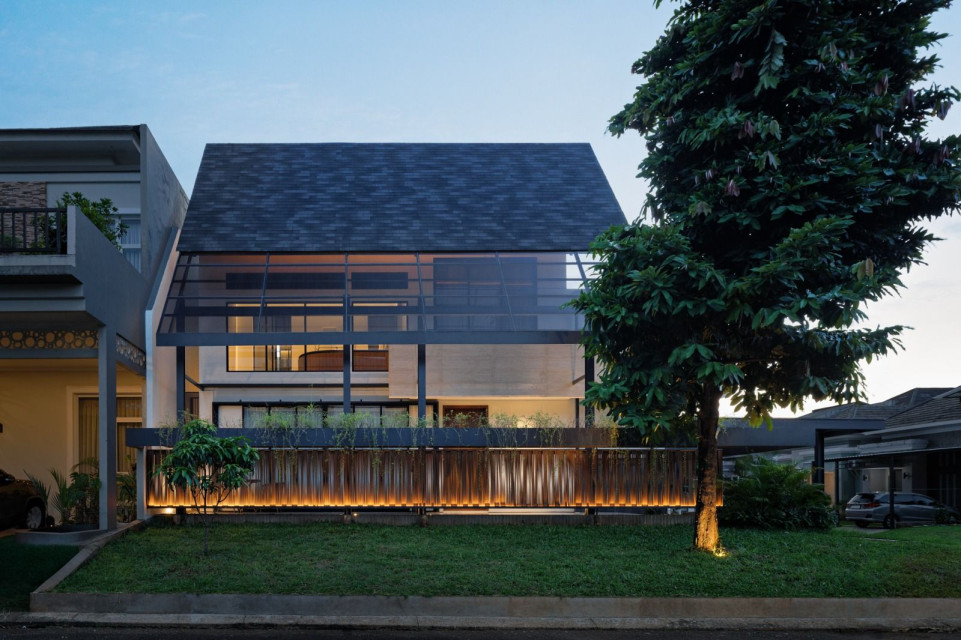
Rather than relying on mechanical dependence, the house is structured around passive performance. Cross ventilation is fundamental, enabled by the site's non-adjoining edges and articulated through vertical openings and garden voids. The air movement is continuous, measured, and intentional.
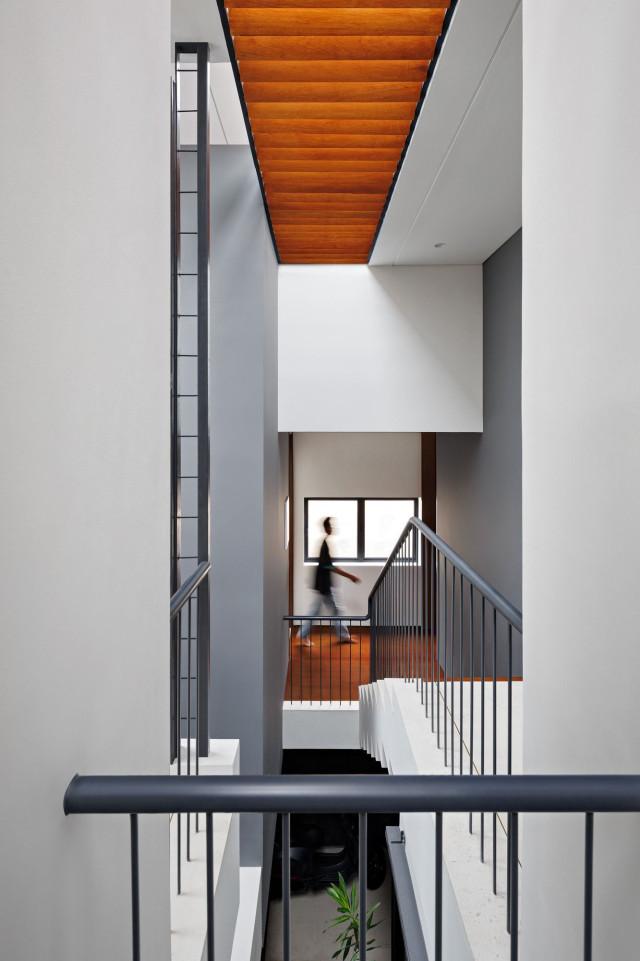
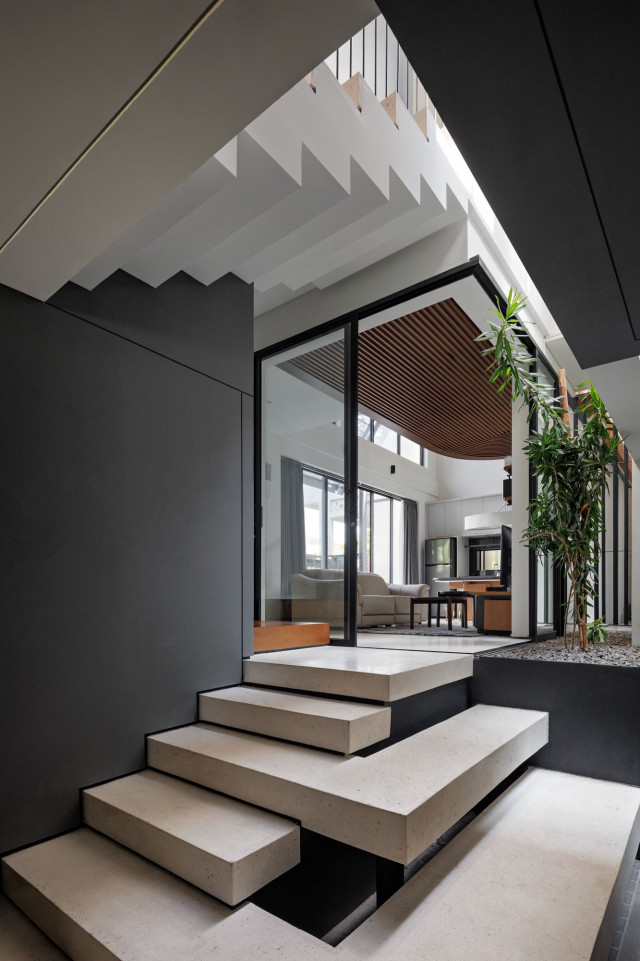
A central garden becomes the spatial and environmental anchor, introducing daylight through skylights while enabling thermal release across levels. The split-level organisation and the central void are not compositional gestures; they are spatial devices that expand perception within a compact footprint.
The often-concealed rainwater is treated as an expressive environmental actor. Responding Alam Sutera's high rainfall, the sloped roof allows water to descend directly onto the ground, bypassing conventional gutters. The result is pragmatic and legible—a house that does not hide its relationship with climate.
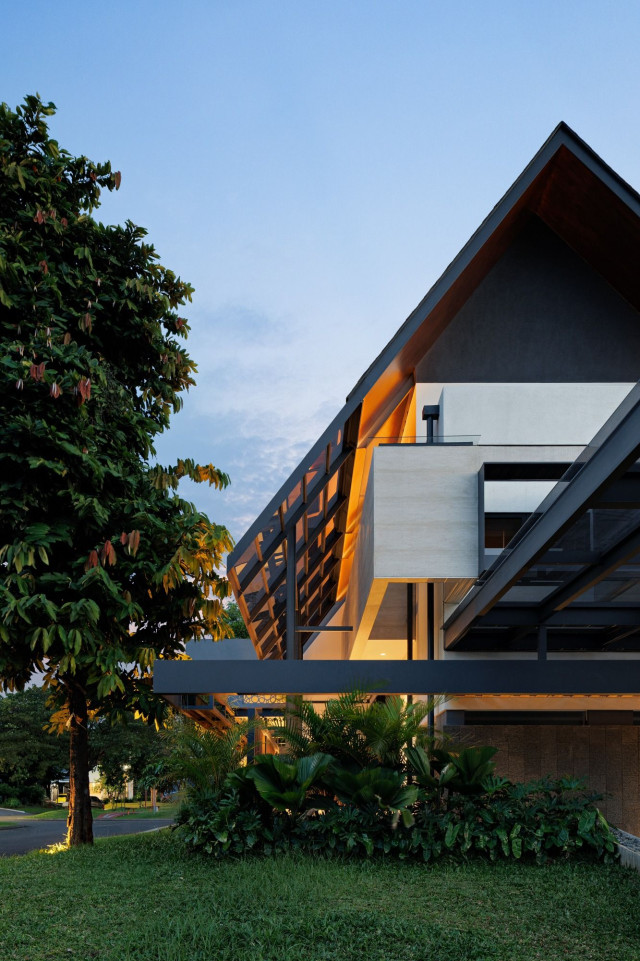
The house negotiates hospitality through spatial gradation, rather than enclosure. An open terrace mediates between public and private realms, allowing interaction without obligation. It functions as an architectural pause, a space of reception that does not compromise its domestic privacy.
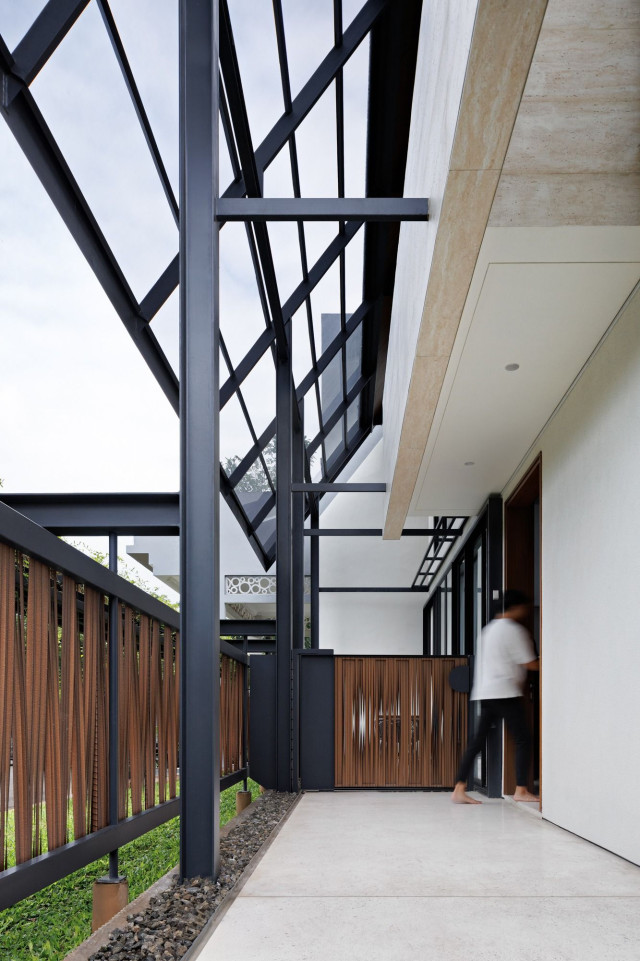
Large sliding glass panels dissolve the boundary between the terrace and the living and dining spaces, allowing the interior to expand or retract as needed. This flexibility supports both quiet weekday use nad occasional family gatherings, without over-programming the house plan.
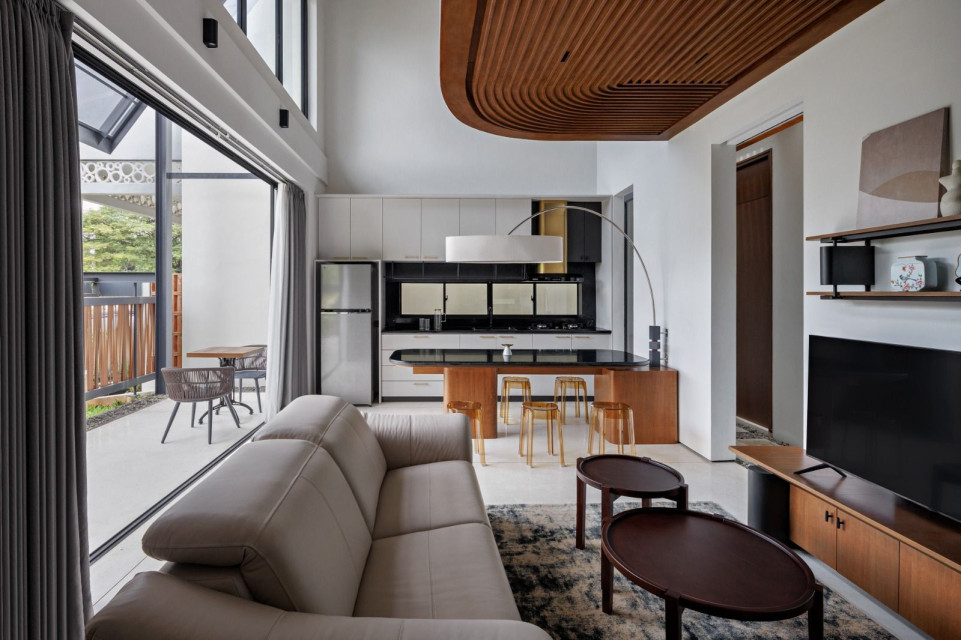
Although the house is not occupied daily, it is designed to age responsibly. Material choices prioritizes durability, ease of upkeep, and climatic appropriateness. Ventilation, flooring, and openings are coordinated to reduce reliance on constant human intervention.
Public and private zones are carefully stratified. A mezzanine guest bedroom with its own separate bathroom ensures autonomy for visitors. Meanwhile, a compact work-from-home room above acknowledges contemporary hybrid work patterns, integrated but not necessarily dominant.
The master bedroom is located on the ground floor, separated from the garage by a garden buffer, ensuring privacy while supporting short, frequent stays. The oversized garage accommodates the owners' table tennis routine, reflecting a design approach attentive to lived habits rather than abstract programs.
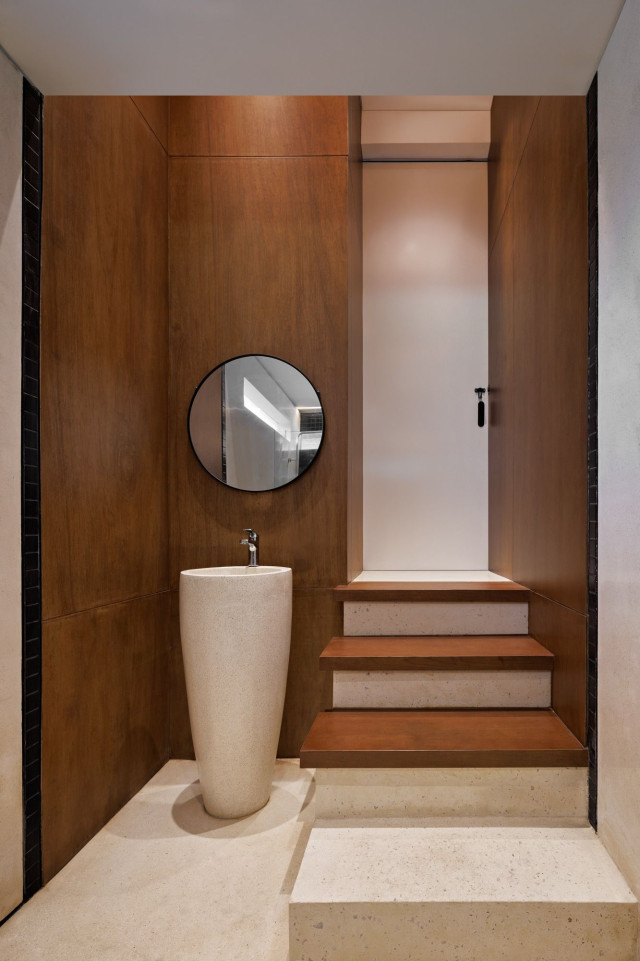
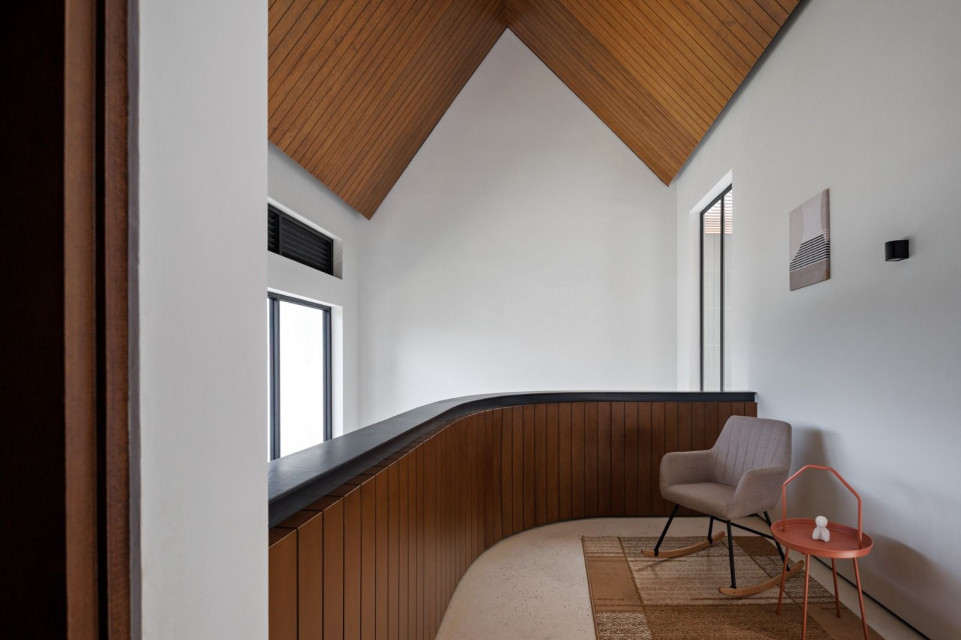
Strict building setbacks and compact site do not restrict the project, they sharpen it. Instead of maximising enclosure, the design embraces porosity. Space is released through voids, light is borrowed strategically, and boundaries are softened where possible. The result is a house that performs consistently and quietly, giving more than its size suggests through air, light, and spatial clarity.
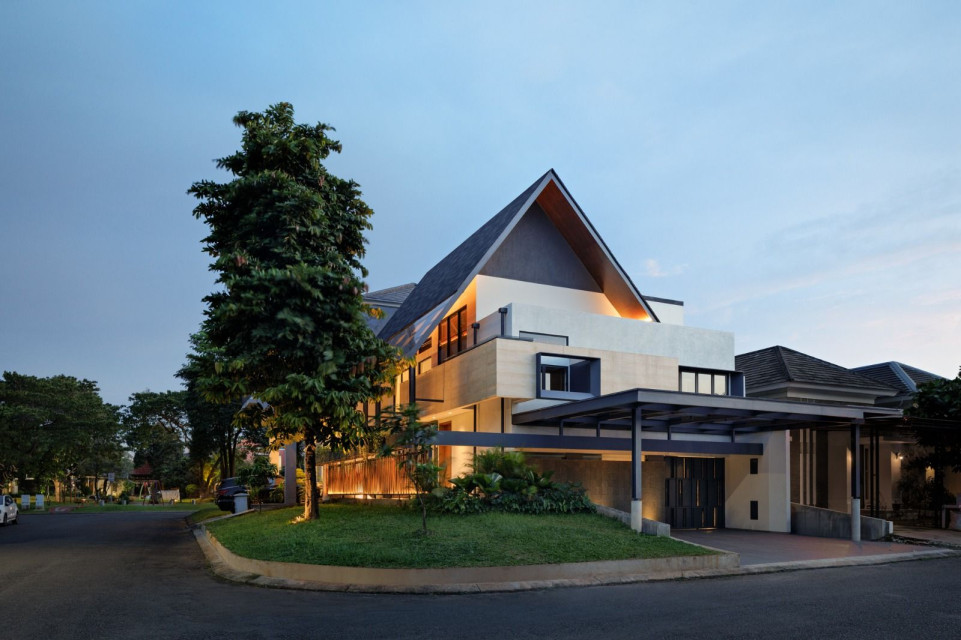
Rather than a stylistic statement, N Weekday House is a precise architectural response to contemporary living patterns where work, family, and geography no longer align neatly. The project also reflects a broader position where architecture becomes an instrument of restraint and long-term value. It is not reactive and excessive, simply an accurate solution for certain needs.